Have you ever had an experience, at work, or in your personal life, when you were in the zone? When you excelled at what you were doing, and you were firing on all cylinders? If this has happened to you, the chances are that you were in what psychologists refer to as flow.
Flow happens when we are completely absorbed in doing something, which hits the sweet spot of demanding just the right level of skill and challenge. Mihaly Csikszentmihalyi was the psychologist that brought the concept of flow to the masses, via his seminal 1990 book: Flow – the psychology of optimal experience. He describes flow as:
“…being completely involved in an activity for its own sake. The ego falls away. Time flies. Every action, movement, and thought follows inevitably from the previous one, like playing jazz. Your whole being is involved, and you’re using your skills to the utmost.”
The role of flow in developing our wellbeing is fairly self-explanatory: when we’re in flow, we are engaged in activities we love doing, we’re spending time doing those things we most enjoy in life, and also tapping into those things which give our life meaning.
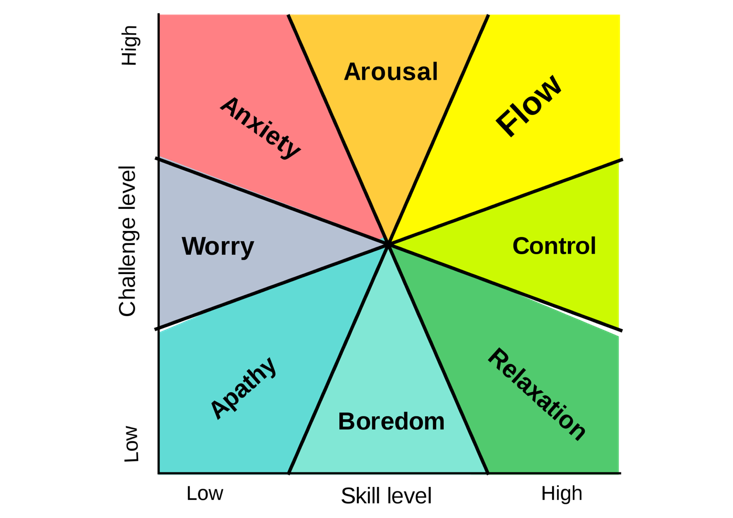
The diagram below offers a simple framework for understanding flow:

Typically musicians and sports people are looked to help us better understand Flow, but how do you know if, or when, you are in Flow? Csikszentmihalyi’s Flow State Scale is a great place to start. Consider the extent to which you agree or disagree with the statements below in relation to an activity whereby you believe you might be in Flow. If you strongly agree with all of the statements then you are in flow!
- I was challenged, but I believed my skills would allow me to meet the challenge.
- My attention was focused entirely on what I was doing.
- I really enjoyed the experience.
- It was no effort to keep my mind on what was happening.
- I felt I was competent enough to meet the high demands of the situation.
- I was not concerned with how I was presenting myself.
- The challenge and my skills were at an equally high level.
- I did things spontaneously and automatically without having to think.
- At times, it almost seemed like things were happening in slow motion.
Getting into a Flow state of mind can happen in lots of different ways and is really personal. For some, it’s about thinking deeply, for others it’s about being part of something bigger, and for others it’s about peace and serenity. If you’d like to find out more about your personal ‘Flow Profile’ check out the Flow Genome Project:
https://www.flowgenomeproject.com/flow-profile
If you want to flex your Flow muscles, here a few tips to help facilitate a Flow state of mind:
- Focus on one thing
- Remove distractions
- Have a specific goal and plan of action
- It is an activity that you enjoy or are passionate about
- There is an element of challenge
- You are able to stretch your current skill level
The concept of Flow has potential to positively impact our wellbeing. We’d love to hear your thoughts on the subject, so do get in touch.