Everything seems pretty grim at the moment doesn’t it? Each day brings more shocking stats about death and illness than the day before. And pretty soon this becomes our reality, which of course has a knock-on effect to our psychological well-being.
But this view is biased.
Whilst no one could argue there is a lot of bad stuff happening in the world right now, this is only part of the story. Yesterday I heard that a friend of mine had just given birth for the first time, after years of being told it would never happen for her. I also read that there are 20+ vaccines for Covid-19 in development, and no matter where you look, people are being kind to each other.
I had to turn off my news alerts over a week ago, as I couldn’t cope with the sensory overload: the sheer volume of negative messages coming at me through my phone, my email, the TV, the radio, Facebook, WhatsApp, Instagram… I’m sure you can relate! The thing is, even before Covid-19, we’re literally bombarded with information every second of every day – images, sounds, smells and more, all day long.
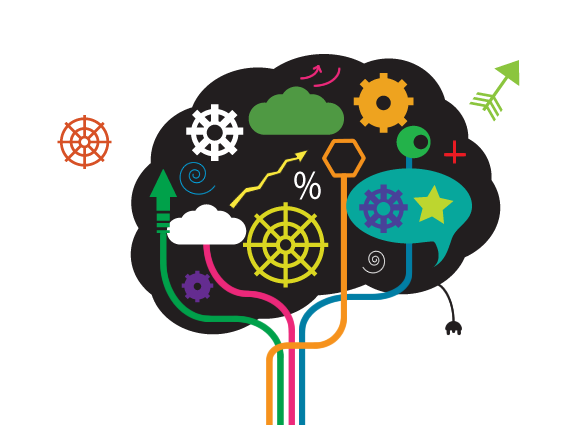 If we were to notice everything going on in our world we’d go mad. So, there’s a part of our brain called the reticular activating system (RAS) that helps filter out all the unnecessary noise that we’re bombarded with. What’s cool is that we can programme the RAS to pay attention to specific information, which can be both super helpful, or unhelpful in times like these – it all depends on what we decide to pay attention to….
Let me explain… Our RAS filters out all the unnecessary noise but pays attention to the stuff it perceives as helpful – all at a subconscious level. For example, if we’re in a busy place and we hear someone calling our name, we’ll probably notice this despite all the noise, and even though we don’t think the person is calling for us. This is our RAS at work, paying attention to information that might be useful to us.
Another example: Have you ever decided to buy a new car, in a particular colour and then you suddenly see that car in that colour everywhere? That’s our RAS at work, it’s not a coincidence.
The thing with the RAS is that it is particularly attuned to notice any information which relates to threat and danger. This is mostly a good thing as it helps us survive. The problem at the moment, is that the vast majority of information coming in is threat and danger information. Before long we are stuck in a virtuous circle, actively looking out for this information, noticing more and more threat and danger and then believing that this is our reality. But just how many of us are noticing the daily covid-19 stats which show the numbers of people who have recovered from the virus? More likely we are focused on the numbers of deaths which creates a heightened state of anxiety.
Of course I’m not suggesting we live in denial about what is happening in the world, but what we need to do is to get a more balanced view and here is how the RAS can be helpful. We can deliberately programme the RAS by choosing messages we wish to notice. Something as simple as only tuning into the news once a day can make a big difference. And ensuring we balance this by actively seeking out other information. There are websites out there which share positive news such as the Good News Network:
https://www.goodnewsnetwork.org/another-roundup-of-positive-updates-on-covid-outbreaks/
We can actively teach our brains to scan for the positive as well as the negative, which will have a significant impact on our wellbeing and anxiety levels. I know it’s not easy, but this will help to create a more balanced view of what’s going on in the world right now.
We can also create a very specific picture of our goals in our conscious mind. The RAS will then pass this on to our subconscious – which will then help us achieve the goal. It does this by bringing to our attention all the relevant information which otherwise might have remained as ‘background noise’.
With this in mind, over the coming weeks and months we are going to share positive news stories with you via our weekly People Lab Playlist:
- We’re going to share stories of companies who are doing great work with their people despite the challenging conditions.
- We’re going to share stories from employees all over the world about their ‘new normal’, what this means to them and how they are coping.
- We’re going to share cool stuff that’s happening, whether it’s a virtual gallery tour, a global pub quiz, or virtual gigs, comedy and cooking lessons.
- We’re going to share messages of hope from people who have something to say about the positives coming out of this situation for them.
We’re launching the People Lab Playlist later this week, so sign up to our mailing list to make sure you don’t miss out.
And please get involved by sharing your stories, learnings, positives, and anything cool that’s happening that we can share with our readers – we’d love to hear from you!
Email: info@peoplelab.co.uk
Twitter: https://twitter.com/peoplelab_
Facebook: https://www.facebook.com/PeopleLabEngagement/
LinkedIn: https://www.linkedin.com/company/people-lab-emma-bridger/