So you’ve spent time and effort developing a set of evidence-based employee personas. They detail employee needs and motivations; they’re behavioural and not just focused on demographics. You’re quite rightly proud of what you and your team have produced. You know they have the potential to help you design and deliver experiences which are going to make a real difference to your people… But what happens next?
It’s often the case that personas are then forgotten, and left to gather dust. We hear this story time and again – “yes we developed a set of employee personas, but they never get used…”
So how do you avoid the ‘persona graveyard’ and ensure you make use of all of this insight you’ve gathered?
A reminder of why we use them…
Let’s for a minute remind ourselves of the purpose of employee personas – they are a ‘thinking-tool‘. They are there to help to you, and anyone designing experiences in your organisation, understand things from the perspective of the people you are designing for. Employee personas help you to take a human-centric approach to EX. So each and every time you’re having conversations, workshops, running design-sprints etc you should be thinking about using them…
Using personas with EX power tools…
One of the best tools I’ve used to ensure you put your personas to work is the ‘empathy map’
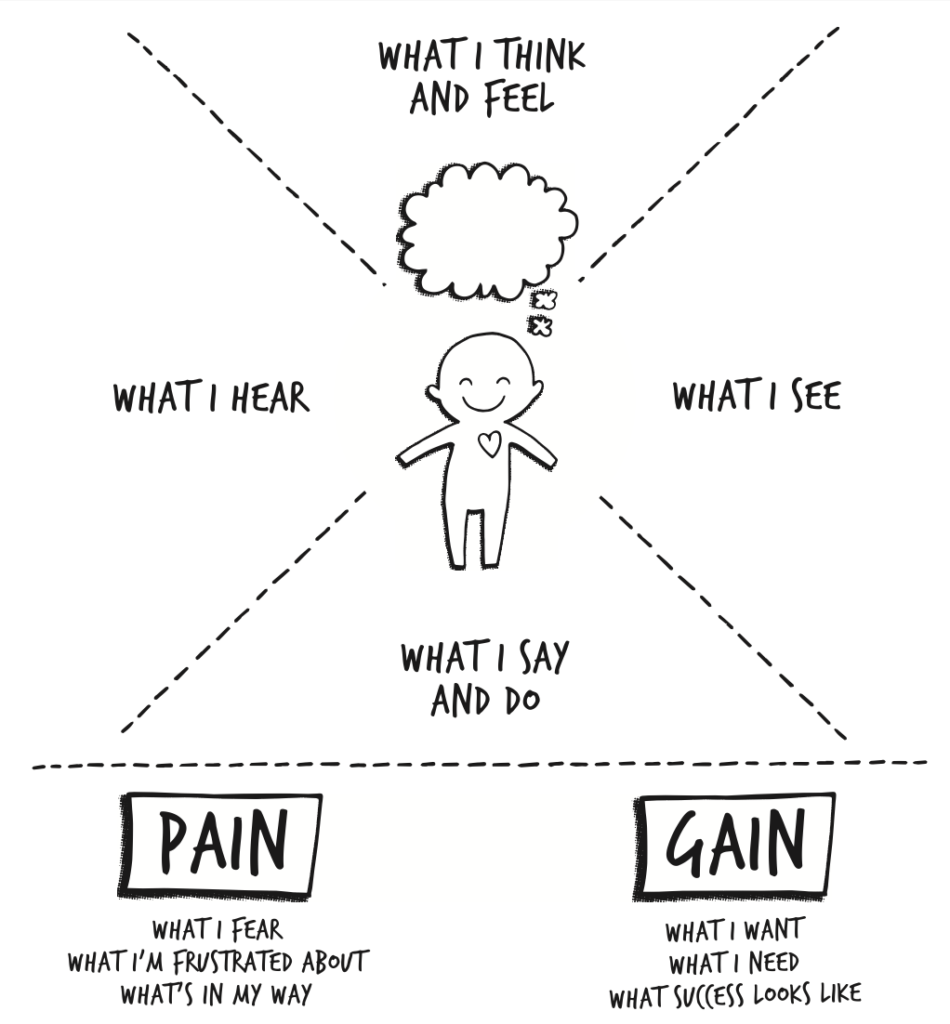
Empathy maps can help us apply the insights from our employee personas to an actual experience, or moment that matters.
Let’s imagine you are redesigning your recognition approach, and this involves understanding the current experience from the perspective of your different employees (using a new empathy map for each persona).
You might uncover very quickly some key insights to help you redesign your approach. For example, one personas might like to be made a fuss of, to enjoy some public recognition for their efforts. Whilst another persona may want something much more low-key and subtle – in fact they might hate the idea of anyone calling them out in public even if it is to applaud the work they have been doing.
Using an empathy map is quick and easy and helps to overcome any assumptions and biases you may have about what a good experience looks like. Creating empathy maps to use with your personas is a great way to interrogate, make sense of the data, create and share insights. They help to externalize knowledge about employee needs and ensure a shared understanding. And they are a great tool to ensure you actually put your employee personas to work.
Are you using personas and empathy maps? If you are we’d love to hear from you and share the work you’re doing with our network. Or if you’d like to know more about how to develop and then use employee personas, get in touch for a chat, we’d love to hear from you.