I read a thought-provoking post on LinkedIn this week from my fabulous friend, Tom Crawford, that I wanted to share with you. In his post Tom wrote:
‘Dear corporates, I don’t want to hear about your “cool” yoga sessions in the canteen or mindfulness sessions in car park as part of #mentalhealthawarenessweek if you haven’t made serious and tangible efforts to make sure your work place is psychologically safe on any given day and is free from toxic behaviours. That starts with leaders and culture. I also want reassurance that you’ve taken steps to educate about unconscious bias, so that if you encourage any brave soul to tell a real story about their mental health, they don’t live to regret the consequences….
Mental health costs lives and careers. Don’t play with it for the sake of being seen to do the right thing. The great news is the attributes of a mentally positive workplace are also those which enable and motivate your people to do great things and drive organisational performance.
And those toxic behaviours? Ironically, they come from people with poor mental health. Hurt people, hurt people #mentalhealth’
(I highly recommend you follow Tom on LinkedIn if you don’t already).
This post really resonated with me. Why is it that organisations go for the solutions that are superficial; the shiny, latest new thing to address a challenge? As Tom points out, addressing mental health challenges, and promoting wellbeing, starts with a long hard look at your culture, your leaders, and your behaviours.
It’s not just organisational approaches to mental health which suffer from the superficial, latest ‘thing’ solutions – it runs through pretty much every aspect of employee experience and engagement. You won’t fix engagement with ping-pong tables and free beer Fridays. A brilliant experience is not personified by a sexy welcome hamper and a mug with your name on it. And no, an app will not be the answer to everything. So why do organisations so often reach for style over substance?
My hunch is that these solutions are often easy, although not always cheap and not cost effective. They give the illusion of taking action to fix a problem, in the absence of really knowing where to begin. The problem is that the symptoms are taken at face value, and the solution will often be a quick fix instead of getting to the root cause.
Does this sound familiar?
- Got an absenteeism problem? No problem, we’ve got an app that will gamify attendance, your people will love being part of a leader board and win prizes when they hit 100% attendance
- Got a problem with engagement? No problem let’s throw a big party and reinstate the free-beer Fridays again
- Got a problem with recognition? No problem let’s ramp up the employee of the month scheme, throw in some big prizes and spend a load of money on a glittering awards do
- And as Tom alludes to in his post – got a mental health issue? No problem we’ll pay for you to subscribe to a mindfulness app and bring in someone to run yoga on a Wednesday.
It’s not that I am against the solutions listed above – in fact I’m a big fan of the headspace app! The problem is, that they don’t get to the root cause of what is really going on. It is critical to take time to thoroughly diagnose the problem you are trying to solve and get really clear on either the problem itself, or the opportunity it presents. And the way to do this is to put your people at the heart of the process.
For example, your absenteeism problem could be caused by toxic behaviours in certain managers. Low engagement might be because people don’t feel valued or appreciated. Lack of recognition could be because employees are not thanked for a job well done. What is critical, is to invest in the time to really understand the people you’re trying to solve for, and understand the problem from their perspective. You’ll only get to the root cause when you take an empathic approach and avoid jumping straight to solutions, no matter how sexy or shiny they are.
In my 20 plus years of working in this field, I have yet to hear someone say that their mental health would be sorted by yoga in the canteen, or that their morale would be fixed with a good game of ping-pong.
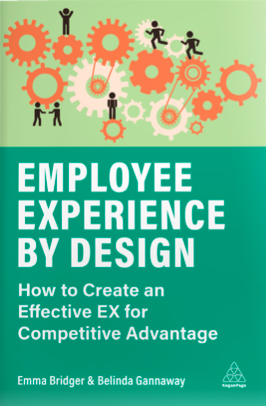 You can find out more about our approach to designing brilliant experiences, how to put people at the heart of your design and how to avoid jumping straight to (often unhelpful) solutions in Emma and Belinda’s latest book, Employee Experience by design (Kogan Page). Even better if you follow this link and use code AHR20, you’ll get 20% off the RRP!