Over the past few years, organisations have weathered a relentless pace of change – from the shift to hybrid working, to restructures, budget squeezes, and the rapid integration of new technologies, including AI. While many of these changes are necessary, the way they’re introduced and managed often leaves people feeling exhausted, confused, or disengaged.
What we’re seeing – again and again – is that it’s not the change itself that’s the problem, it’s the experience of the change.
When communication is inconsistent, decisions are made in silos, and employees feel like change is being done to them, it creates a culture of anxiety, fatigue, and mistrust. Over time, that’s a direct hit to engagement, performance, and retention.
The fatigue is real
We hear it every day from employees and EX practitioners alike: “We’ve had so much change – but no time to reflect, embed, or support people through it.” When change feels constant and poorly designed, people become emotionally worn down. They might stop engaging with new initiatives, withdraw from team conversations, or adopt a “wait it out” mindset.
And that doesn’t just affect morale – it slows down progress and undermines future change too.
Design the experience, don’t just manage the change
This is where Employee Experience (EX) design comes in. Instead of approaching change as something to control, EX design invites us to get curious, step into employees’ shoes, and shape experiences that work for everyone.
At its heart, EX design draws on human-centred design principles:
- Start with empathy – understand what employees are thinking, feeling, saying and doing
- Frame the real problem you’re trying to solve, not just the organisational objective
- Involve employees in co-creating the solution, so change feels meaningful and owned
- Prototype and test ideas before rolling them out across the organisation
- Continuously listen, learn and iterate
This isn’t about creating a perfect experience. It’s about designing change that feels clearer, fairer and more human.
What this can look like in practice
We’ve supported teams who are transforming their approach by putting design into action. For example:
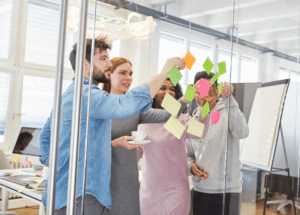
- Hosting employee workshops to explore pain points and define what a better future state could look like
- Using empathy maps and personas to surface diverse experiences across the organisation
- Running ideation sessions with cross-functional teams to generate creative, practical ideas
- Developing low-fidelity prototypes – such as mock-ups of new comms or processes – and testing them with small groups
- Embedding feedback loops throughout the change journey to adapt in real time
For EX professionals, this approach helps you move from being reactive and overwhelmed to proactive, structured and impactful. It gives you a clear method, language and set of tools – making it easier to get buy-in, build credibility, and stop chasing your tail.
And for senior leaders, it offers tangible business outcomes: fewer failed change initiatives, increased trust and engagement, better retention, and a more adaptive workforce. In other words, designing the experience makes change more successful.
You don’t have to do it alone
At People Lab, we help organisations bring employee experience design to life – whether you’re navigating a big change, looking to solve a specific challenge, or building a longer-term EX strategy. From insight gathering and journey mapping to ideation and prototyping, we’ll help you create experiences that work for your people and your organisation.
👉 Get in touch to explore how we can support your team.
Or, if you’re looking to lead this work internally, explore The EX Space – our online community packed with tools, templates and resources to help you embed EX design in your own organisation.