Have you heard about Autism Hour? It’s when shops and businesses dim their lights and reduce the noise to help create a calmer atmosphere for autistic shoppers and workers. Launched by the National Autistic Society, the campaign runs from 6th to 13th October and it aims to make a difference by helping people learn more about autism.
There are 700,000 autistic people in the UK and I live with two of them: my husband Ted and my eldest son Harry, who is 15 – they are both Aspergers. I decided to ask them about their experiences at school and work, and what we can do to support them.
How would you describe being Aspergers to someone like me – a ‘neuro-typical’? (which is how Harry refers to me)
Harry – Imagine you’re sitting in a busy place and you focus on every, individual single noise one at a time and then imagine hearing them all at the same time together – that’s what it’s like for me
Ted – It’s hard to prioritise which noise or sound to listen to, they all hit simultaneously… it can also be smells, light levels, visual stimulation, touch and more….
Harry – it’s also an inability to read people – Social situations can be difficult, for example when you receive a text from a friend, you just see the words without picking up any cues or other meaning
Ted – Yes, it’s understanding other peoples intentions that’s difficult, I often feel I’m missing something
Can you share some of your experiences of being Aspergers?
Harry – I find it stressful knowing if people like me or not, and although it might not be important whether people like you or not, it’s that people don’t just say ‘yes I like you or no I don’t like you’ –I find this stressful. Social interaction is somewhat of a paradox for me – I want to join a conversation or social situation, but I don’ t know how. I can’t learn the skills to help me join in – it’s a vicious circle, it’s very difficult
Ted – I find office environments can be difficult – background noise and lights in offices are very distracting. I sometimes find social situations at work and outside of work awkward – I don’t understand if I’m welcome. I know I’m unusual because of my autism. I use a system to engage with people in social situations because I don’t really understand the etiquette – for example at a party or gathering I’ll systematically go round and talk to every single person in the room.
Where has being Aspergers helped?
Harry – It gives me a sense of identity. It’s a fundamental part of what makes me – me, so I don’t see it as a problem
Ted – It’s helped me to notice patterns and themes, and working out problems – even when people don’t know themselves there’s a problem. This has helped me in work over the years.
Where has it not helped?
Harry – School is difficult at the best of times, and the social side of things is very important. I don’t think in the same way that most others do, and for me success isn’t based on if I have girlfriend, or how popular I am and because of that I seem odd to others, or less than them in someway, like there’s something wrong with me…
Ted – It’s very distracting, you get caught up on something like a puzzle, and you can’t let it go, even though you want to let it go you can’t, solving the puzzle is more important than the actual resolution .
What other autistic people do you admire
Harry – Chris Packham
Ted – Mr Spock
What would you like other people to understand about Aspergers
Harry – There’s not something wrong with us that needs to be resolved or fixed – just because we don’t conform to the norms of society, that’s ok. We don’t need to change to fit in
Ted – the things we find difficult are things that ‘neuro-typcials’ would not. For example if we go for dinner with friends, everyone else thinks it’s a great night, relaxed and easy company – but for us it can be stressful, bright, lots going on, people talking, clock-ticking, music playing, smells – it’s difficult, and stressful, especially if we feel over-stimulated. It’s never quiet for me even when it seems quiet for others
Harry – Yes even in lessons at school, when no one is talking, all the other noises are really loud for me, clock ticking, pens scribbling, paper turning, it’s always noisy…
What advice can you give to others re how to support you?
Harry – Be straightforward with your language. In social situations say things exactly as they are. If I’m having what I call an ‘autistic panic attack’ (Harry calls these APAs) you can pick up that I’m getting stressed. For example increased breathing, rapid eye movements, agitated movements, fidgeting. When I have an APA I just need time to be left alone, ideally do nothing. I know this sounds harsh but I need to remove myself from the situation and calm down – so although your instinct might be to help, actually try not to help. Give me time to calm down and then come and find me a while later when stress levels have lowered. People’s instincts are to help by talking, or hugging but this makes it worse and causes more stress and stimulation
Ted – Just be kind 🙂 Even without understanding Austism, kindness goes a long way and means a lot – I know I’m odd!
Thank you both for sharing this with us.
So, what else can you do for Autism at work?
The Autism Society recommends:
- Making adjustments to your place of work so it is less overwhelming for autistic people: This normally means turning down music and other background noise, and dimming lights where it is safe to do so, but there are other adjustments you can put in place to create an effective Autism Hour
- Educate your employees about autism: You don’t have to be an expert, but a little understanding can go a long way.
I’d like to say a massive thank you to Harry and Ted for sharing their experiences with our readers. If you’d like to find out more about Autism hour, you can find it on the National Autistic Society Website.
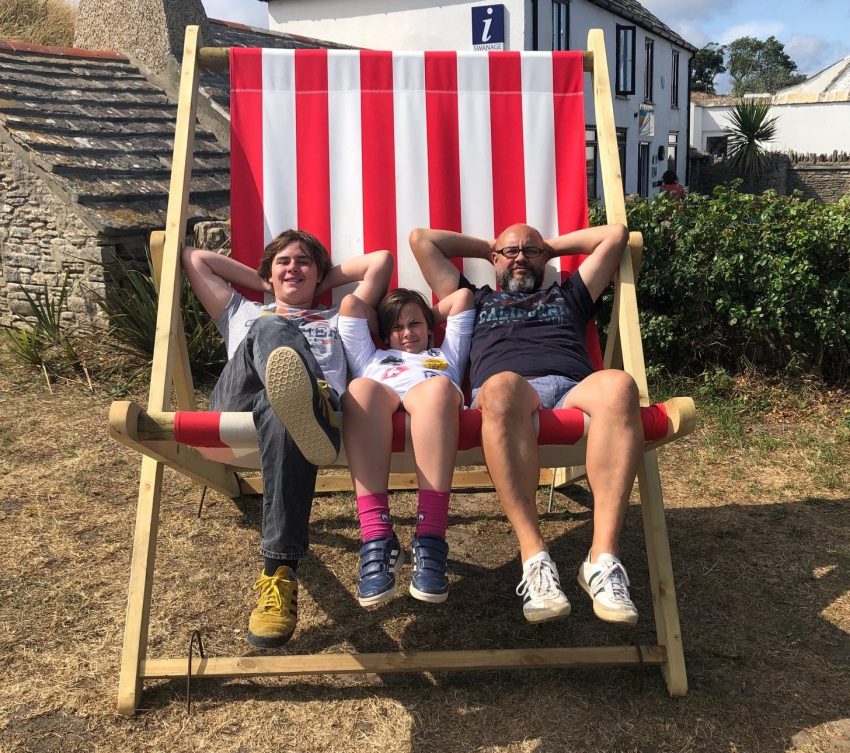
Left to right, Harry, Teddy and Ted