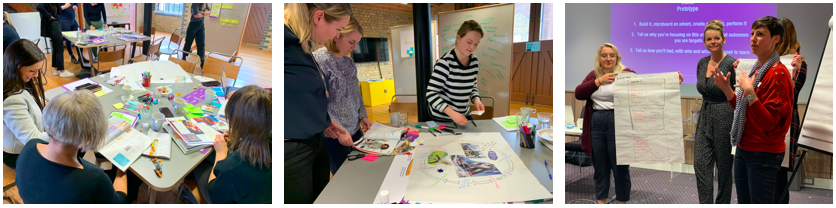
We’ve worked with dozens of organisations over the last year, introducing them to new ways to understand and design the employee experience. But this isn’t a cerebral activity. Even when we’re right at the beginning of building EX design capability, we love to get our hands dirty.
EX design is a thoroughly practical approach, so we help people teams put the tools to work straight away. And the activity that really gets them fired up is creating prototypes. Whether we’re in the room or in a virtual group, building EX prototypes creates more energy, alignment and innovation than any other task.
Leading design thinker Jon Kolko wrote in HBR that: “Prototyping is probably the single most pragmatic behavior the innovative firm can practice.” And we agree. It’s practical, inspiring and instantly turns ideas – which can be ten a penny – into something more actionable. Of course, there are small p prototypes, and then there are big P Prototypes. If you’re conjuring up images of fully engineered models just returned from a studio or production line, think again.
A prototype is the first design of something from which other forms are copied or developed. That last word is important, because the end product, service or experience might look very different from where you start out. The first prototype – even the first few iterations of a prototype – is usually a very rough execution of an idea. Think a cartoon storyboard of an online experience, rather than a website or app. Quick and dirty is the key. The prototypes that emerge in the early stages of an EX design process, are called low-fidelity prototypes. We’ve seen teams create prototypes in LEGO, through role play, as well as with arts and crafts materials. There’s nothing like building together to cement team bonding and energy – and create a shared sense of where you’re heading.
Prototypes are often confused with minimal viable products (MVPs) – sometimes called minimal lovable products. However, the two are different. An MVP is a version of a product or solution with just enough features to satisfy early users and provide feedback for future development. A prototype, on the other hand, is a much earlier embodiment of an idea. It doesn’t matter if prototypes are a bit rough and ready. In fact, that is the point. Prototypes are not created to sell a solution. They exist to communicate an idea sufficiently well as to learn something new. So the purpose of a prototype is to efficiently communicate an idea to enable feedback and learning. The quicker and more efficiently you can do that, the better.
In the last few months we’ve seen EX prototypes in many guises:
- 3D poster of an appraisal process (the Blue Peter version involving cardboard boxes and sticky tape, not the digital variety)
- Cartoon storyboard of a peer-to-peer recognition progamme
- A Post-It Note UX of an online campaign to encourage applicants from more diverse backgrounds
- Paper, scissors and glue mock-up of a ‘reinduction magazine’
- LEGO model of a team integration process
- Flow-chart poster of a COVID back-to-workplace comms plan
- Cover of a magazine publicising a new parental leave approach
- A flat plan for an Unlonely Planet employee guide for new joiners
- A team session plan to help groups recover from the resignation of a team member
- LEGO model of a new journey for people leaving the organisation
- Role play of a new joiner’s first day
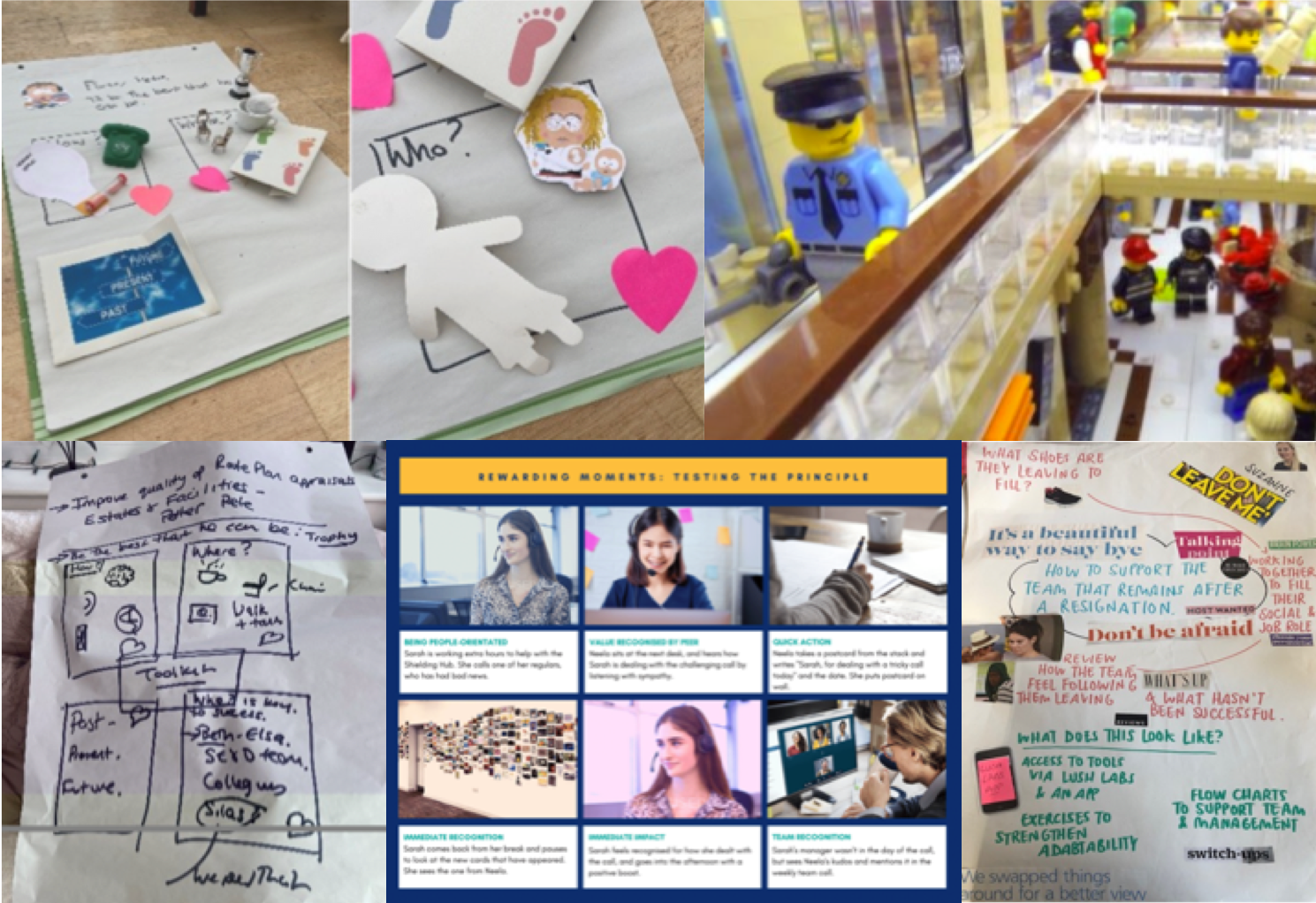
What all these executions have in common is that they exist solely to communicate and generate feedback. The final solution may look nothing like these prototypes.
Putting prototypes to work
Many people teams say they test and learn. It’s the new language of teams across business, not just in HR. But how many do test an idea in the very early stages and then learn from that test? In our experience, the answer is not many. That’s where prototypes come in.
The best thing about prototypes is you can start small. Really small – like pen, paper and glue small. In EX design, a first prototype is usually a rough representation of an idea and requires little time, no specialised skills and barely any resources to create. The ideal EX prototype is quick to build and simple to share. It can easily be altered, including radically redesigned, in response to what is learned.
The first step in creating a successful prototype – i.e. one you can use to get feedback on your ideas – is getting in the right frame of mind – people need to be helped to get into the habit of building to think. Prototyping sessions should be fun, energetic and collaborative. Friend and collaborator Lindsay Bousman, owner of Intentional Talent Management and formerly at Expedia, describes how when they did an onsite workshop and the facilitators pulled out huge bags of craft materials “we instantly knew this was different, and they really meant scrappy and fast”.
All of this can be achieved online with careful facilitation and the right tools. If you’d like to know more about how to do it, get in touch. Or watch this space. We’ll be sharing more practical tips soon. Even better, if you’d like to learn and practice these skills and tools for yourself, why not sign up to our next EX Design Workshop series (starting on September 9).
Prototypes are powerful allies on the journey to design better employee experiences. Tom Kelley, founder of America’s leading design firm IDEO, describes prototyping as a problem-solving culture and language. It’s not what you create that matters, he explains, but “moving the ball forward, achieving some part of your goal. Not wasting time.”